
D.O. Alicante wines: pairing rice and wine in the Vinalopó
The D.O. Alicante wines are one of the great treasures of the Vinalopó Valley, and few things go better with a country rice dish than a glass born in these very lands. At Finca La Esperanza, among olive trees and at the foot of the Sierra del Maigmó, we understand wine as the natural extension of the kitchen: what grows nearby is eaten and drunk together. This guide walks through the grapes, the styles and the keys to getting the pairing of rice and wine right.
The Alicante Denomination of Origin
The Alicante Denomination of Origin is one of the oldest and most singular in Spain. It covers vineyards that stretch across two clearly distinct zones: the coastal strip of La Marina, fresher and more Atlantic in character, and the continental interior of the Vinalopó and the Alto Vinalopó, where the dry climate, the altitude and the limestone soils shape wines of great concentration.
Here, in the heart of the region, the vineyard lives alongside the olive and the almond in a landscape that defines the identity of Petrer and the neighbouring towns. The winemaking tradition is not a tourist add-on: it is part of the historic fabric of the area, with centuries-old wineries and cooperatives that have managed to keep the native varieties alive.
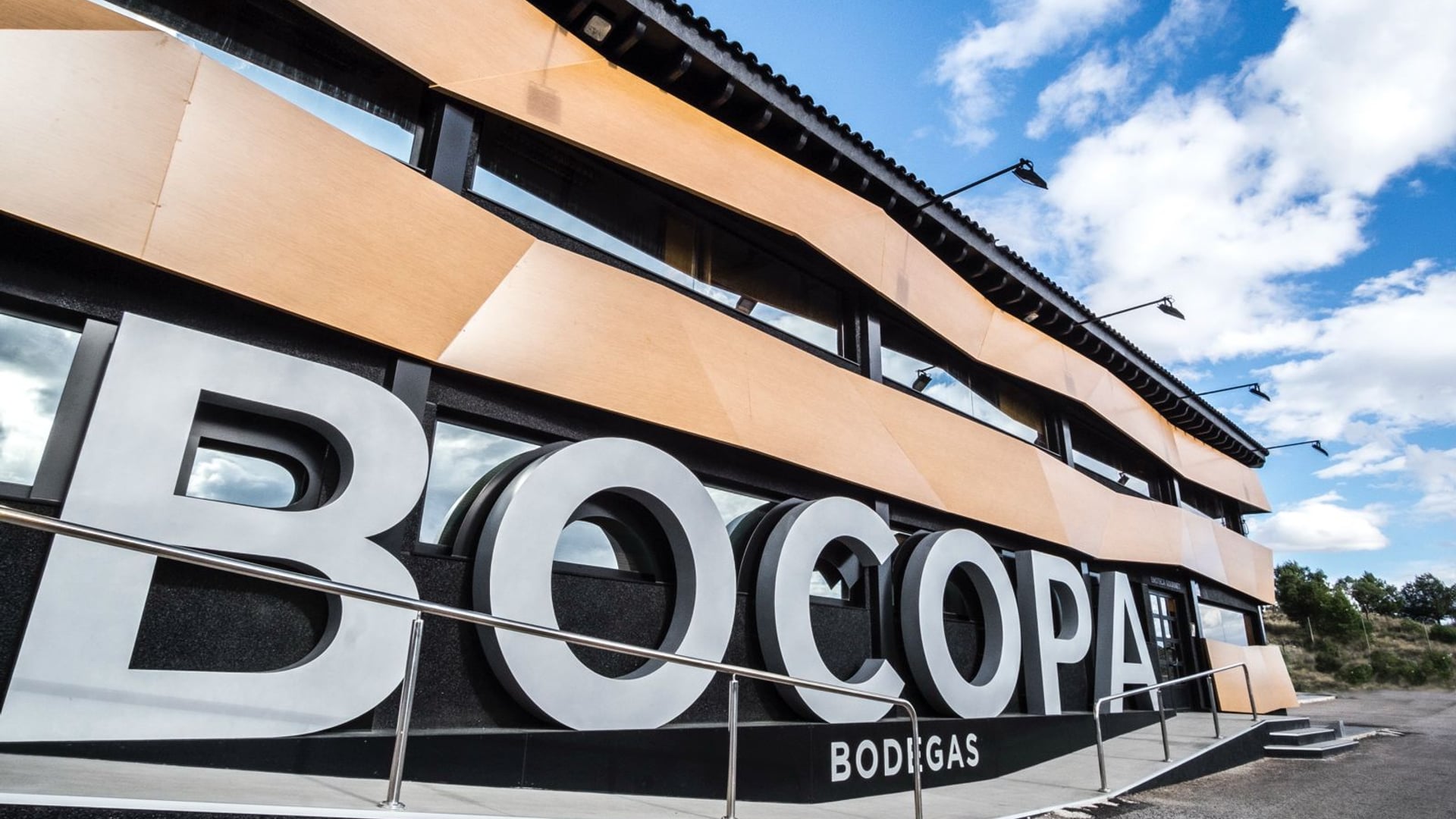
A reference point of this culture is Bodegas Bocopa, founded in 1957, which brings together the work of many winegrowers of the Vinalopó and makes wines from the emblematic grapes of the land: Monastrell, Garnacha Tintorera and Moscatel. Its work has been key to giving the interior wines a profile beyond the borders of the province.
What makes the wines of this denomination special is precisely the harshness of the environment. Rainfall is scarce, the summer long and hot, and the vine has to struggle to survive. That struggle translates into small bunches, with thick skins, with a concentration of aromas and sugars that only the old dry-farmed vines can give. It is no coincidence that many of the Monastrell vines worked by the wineries of the area are over forty or fifty years old.
Two landscapes, one same seal
The D.O. Alicante has the particularity of covering territories very different from one another. On the coast, the marine influence softens the temperatures and brings freshness and saline nuances. In the interior of the Vinalopó, the continentality —very warm days and cool nights— favours a slow ripening and a temperature contrast that fixes the colour and the aromas. That difference in altitude and climate explains why one same seal can offer wines so diverse, from light aperitif whites to dense wines for ageing.
The wine of Alicante cannot be understood without its landscape: old vines resisting the drought, poor soils that force the vine to concentrate every drop of flavour, and a sun that ripens the grape to the very last degree.
The Monastrell: the soul of the region
If one grape defines the D.O. Alicante wines, it is the Monastrell. A red variety perfectly adapted to the drought and the heat of the interior, it produces wines with body, intense colour and an unmistakable personality: ripe black fruit, notes of scrubland, aromatic herbs and a mineral base that recalls the earth where it grows.
The Monastrell is a late-ripening grape that needs plenty of sun, something the Vinalopó offers in abundance. From it come young, fresh and juicy reds, but also great aged wines that gain complexity from their time in oak barrels.
Styles of Monastrell
- Young red: fruity, direct, with soft tannins. Ideal for everyday drinking and for meat rice dishes.
- Crianza: more structured, with notes of spices, leather and toasted aromas. It pairs well with stews and oven bakes.
- Sweet Monastrell: a naturally sweet red wine, an Alicante classic perfect for chocolate and intense desserts.
The Fondillón: the historic wine of Alicante
The Fondillón is a unique jewel in the world of wine. Made exclusively with Monastrell grapes overripened on the vine itself, it ages oxidatively for a minimum of ten years through the solera system. The result is a rancio wine, dry yet with a natural residual sweetness, mahogany in colour and with deep aromas of dried fruit, walnut, cocoa and old wood.
It was a wine of kings and European courts for centuries, mentioned in classical literature, and today it is one of the few wines in the world recognised with a name of its own within its denomination. To drink a Fondillón is to drink liquid history: each bottle condenses decades of patience and the knowledge of generations of Alicante winemakers.
For its character, the Fondillón is enjoyed after the meal, as a digestif or accompanying cured cheeses, nuts and desserts of the land. It is the perfect finishing touch to a leisurely meal facing the views of the mountains.
It is worth understanding that the Fondillón is not just any wine to which sugar has been added: its sweetness comes entirely from the overripened grape and from the natural concentration that occurs during the long years of ageing. That oxidative process, controlled and patient, is what gives it that range of tertiary aromas —coffee, tobacco, dried fig, noble wood— impossible to reproduce by any other means. Each sip is an exercise in memory: it recalls the wines served in the courts of other centuries and which today few places in the world still keep.
Moscatel and whites of the Mediterranean
The Muscat of Alexandria is the great white grape of the region. Aromatic, floral and with a very marked natural sweetness, it gives rise both to sweet dessert wines and to surprisingly fresh dry whites when it is vinified with care.
The sweet Moscatel wines are a must on the Alicante table: perfumed, with notes of orange blossom, ripe grape and honey, they are ideal for accompanying sweets, fruits and cheeses. The dry Moscatel whites, on the other hand, are being reclaimed as great allies of the aperitif and of seafood dishes, with their aromatic touch and their lively acidity.
Alongside them, other Mediterranean white varieties bring freshness and lightness, ideal for the hot months and for whetting the appetite before a rice dish. On the house menu, a fresh white is always a good choice to accompany the olives, the coca a la pala and the grilled squid.
Principles of pairing rice and wine
Pairing rice and wine is not an exact science, but there are principles that help you get it right. The golden rule is simple: the wine should accompany the dish without overwhelming it or falling short of it. Neither a red that is too powerful over a delicate rice, nor a light white against a hearty stew.
Keys to not going wrong
- Weight against weight: light dishes with light wines; intense dishes with full-bodied wines.
- Proximity rules: a dish of the land almost always pairs well with a wine of the land. The kitchen and the vineyard share a landscape and a logic.
- The sofrito matters: a rice with a powerful sofrito of paprika and ñora pepper calls for a red with enough structure to hold it up.
- Fat calls for acidity: fatty dishes, such as roast lamb, appreciate a wine with acidity that cleanses the palate.
- Sweet with sweet: desserts go better with sweet wines than with dry ones, which would seem harsh next to the sugar.
How to pair the house rice dishes
The Alicante rice dishes are the star dish of the interior, and each one calls for its wine. These are our recommendations for the rice dishes we prepare at the finca, designed to bring out the best in every bite.
Rabbit and snail rice
Our flagship rice, earthy and deep in flavour, calls for a full-bodied Monastrell red. A young, fruity one works very well, but a crianza with notes of scrubland and spices elevates the whole and converses with the rosemary and thyme of the sofrito. It is the most rounded pairing of the house. If you want to delve deeper into this dish, we tell it in detail in our guide to Alicante rice dishes of the Vinalopó.
Cuttlefish and prawn rice
As it carries seafood, this rice allows for two paths. A dry Moscatel white or a fresh Mediterranean white enhances the seafood and brings lightness. If a red is preferred, better a young Monastrell, low in tannin, served slightly cool so as not to crush the delicacy of the prawn.
Vegetable and lean pork rice
A garden rice, balanced and of medium intensity, pairs perfectly with a young Monastrell red or even with a rosé of the land, which brings freshness without detracting from the flavour. It is the most versatile and forgiving option.
Oven bakes and roasted dishes
For the roast lamb and the cuttlefish in its ink, the answer is a red with ageing and structure. The fat of the lamb and the intensity of the stew call for a Monastrell with time in barrel, capable of holding up the dish from beginning to end.
The best pairing is not the most expensive or the most complicated: it is the one that makes dish and glass seem made for each other. In the Vinalopó, the answer is almost always at home.
The Alicante Wine Route
The Alicante Wine Route is an invitation to discover the land through its wineries, its vineyards and its gastronomy. Following it allows you to visit places where the D.O. Alicante wines are made, taste directly at the source and understand why this land gives such particular wines.
Wine tourism has become one of the most complete ways of getting to know the Vinalopó: it combines landscape, culture, history and table in a single experience. A well-planned day can begin with a visit to a winery, continue with a walk among vines and almond trees and culminate with a rice meal washed down with the wine just discovered.
Touring the wineries of the region is also learning to drink with judgement. In a guided tasting you discover how the same type of grape can give such different results depending on the soil, the orientation of the vineyard or the ageing time. You train the sense of smell, you refine the words to describe what you taste and, above all, you lose the fear of having an opinion about wine. That knowledge is then carried to the table: whoever has tasted at the source chooses better the glass that accompanies their dish.
If this plan appeals to you, on our wine tourism page you will find how to organise a getaway that joins the Wine Route with a table at the finca. It is the perfect way to close the circle: to taste the wine where it is born and accompany it with the cuisine that saw it grow.
Wine at Finca La Esperanza
At Finca La Esperanza we believe that a good rice deserves a good wine, and that both taste better when they share an origin. That is why we give prominence to the D.O. Alicante wines, so that every meal is also a small journey through the landscape that surrounds us: the olive trees, the vines and the mountains seen from our arched terrace.
Our team will be delighted to recommend the glass that best accompanies your rice, your coca a la pala or your red prawns in garlic. And to round off the meal, there is nothing like a Fondillón or a sweet Moscatel after lunch, with the coffee and the local sweets.
Remember that at the finca we work by prior reservation only, Wednesday to Sunday from 1:30 pm to 6:30 pm. Book your table by calling 650 45 01 09 or check how to get here on our contact page. We await you with the paella on the fire and the glass ready.