
Tradition and cooking in Petrer: the culinary heritage of the Vinalopó
In Petrer, cooking is not learned from a book: it is inherited. The culinary tradition of the Vinalopó Valley is woven with the same threads that bring families together around the table every Sunday. It is a cuisine without artifice, where the produce rules and the recipe is passed from grandmother to granddaughter with no record other than memory and hands.
The table as the centre of life
In the culture of the Vinalopó, the table is much more than a piece of furniture. It is the place where births are celebrated, deals are closed, those who leave are bidden farewell and those who arrive are welcomed. Every dish has a context: the Sunday baked rice, the winter olleta (stew), the coca with sardine of the Moros y Cristianos festivals. Changing the recipe is almost a sign of disrespect; perfecting it, an obligation.
This relationship between food and life is what makes the gastronomy of Petrer impossible to understand without its people. There is no star chef to replace the hand of a cook who has spent forty years getting the sofrito exactly right. And that authenticity is precisely what those who come to the Vinalopó with an open palate are seeking.
In a world where cooking has become spectacle, Petrer keeps food as an intimate and communal act. Here you do not eat to post a photo: you eat to be together. And that difference, which seems subtle, changes everything.
The calendar sets the menu
The traditional cuisine of Petrer is seasonal by nature, not by trend. In winter, stews of pulses and game warm the homes: gachas, pelotas (meatballs) with turkey, puchero with cardoons. In spring, tender broad beans, wild asparagus and market-garden artichokes set the rhythm of the kitchen. Summer brings the gazpacho manchego in its cold version and the salads with local tomato. And in autumn, the mountain mushrooms and the bagged grape close a cycle that repeats without exhausting itself.
This respect for the season is not a marketing decision: it is common sense. The region's farmers still grow the same varieties as always, and the local cooks still buy directly from them. The circuit is short, the produce is fresh and the flavour needs no explanation.
In Petrer you eat what is in season. Whatever the land gives, that is what is cooked. What is not from here is not on the plate. So it has always been and so it remains.
If you want to learn in detail about the produce of each season, we recommend our article on Mediterranean cuisine in Petrer, where we walk through the region's complete calendar.
Recipes that never expire
There are dishes in Petrer that have not changed in generations. Not because no one has wanted to touch them, but because they do not need it. They are recipes that work just as they are.
The Alicante olleta
With beans, pumpkin, turnips, pork and sausage, the olleta is a subsistence dish turned delicacy. It is cooked slowly, in an earthenware pot, and each family has its own version —some with more vegetables, others with more meat, all with the same depth of flavour. It is the dish prepared when it is cold and many must be fed with whatever is in the larder.
The arroz con costra
A speciality found only in this part of the Mediterranean. The arroz con costra (crusted rice) uses a powerful broth of meat and sausage, and is finished in the oven with a layer of beaten egg that gratinates and seals all the flavours inside. The result is a juicy rice beneath a golden, crisp crust that must be broken with the spoon. It is a dish for celebrations, for festive Sundays.
The cod borreta
With potatoes, spinach, ñora (dried pepper) and desalted cod, the borreta is the Lenten dish that has transcended the religious calendar to stay all year round. It is thrifty cooking raised to an art: humble ingredients treated with respect that yield a dish of deep, unmistakable flavour.
The gazpacho manchego
Nothing to do with the cold Andalusian gazpacho. The gazpacho manchego of the Vinalopó is a hot stew of thin dough cooked in game broth, with seasonal vegetables and the aroma of mountain rosemary. It is shepherd's food, of people who worked the land and needed something to fill and warm them. Today it is a classic that no serious restaurant in the area leaves off its winter menu.
Festivals as guardians of tradition
In Petrer, the festivals are not just music and parades: they are a parallel gastronomic calendar. Each celebration has its associated dish, and breaking that association would be as unthinkable as changing the date of the festival.
Moros y Cristianos
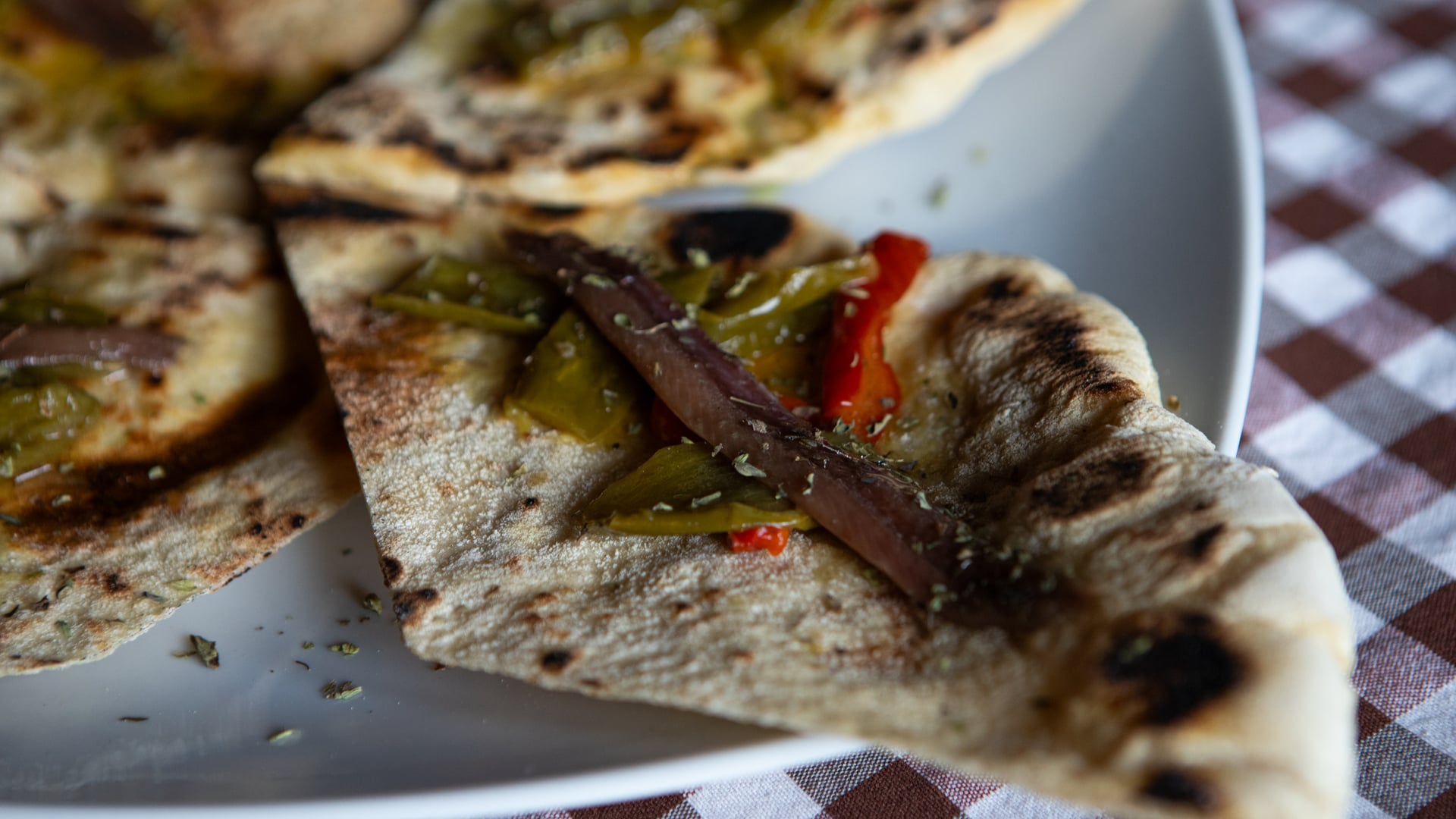
Petrer's Moros y Cristianos festivals, declared of National Tourist Interest, have their own ritual gastronomy. The coca amb sardina —a thin-dough coca with sardines, roasted pepper and tomato— is prepared during the festival days and shared among the comparsas (festival groups). The aniseed rolls and almond sweets accompany the celebrations, and each comparsa's brotherhood meal is an event in itself, with a fixed menu that no one disputes.
Christmas in the Vinalopó
Christmas Eve dinner in Petrer has immovable ingredients: the Christmas pelota (a large ball of minced meat, pine nuts and hard-boiled egg), the stuffed turkey, the turrones of Jijona and Alicante, and the bagged grape of the Vinalopó for the twelve chimes. This grape, with its Denomination of Origin, is probably the one eaten across half of Spain on New Year's Eve.
Holy Week
The abstinence dishes —the cod borreta, the chickpea and spinach potajes, the pumpkin fritters— mark a gastronomy of restriction that, paradoxically, has produced some of the tastiest dishes in the local repertoire.
The generational chain: from grandmother to table
The cooking of Petrer has always been passed on orally and by practice. There are no official recipe books of the Vinalopó: there are hands that teach other hands. The grandmother who shows the granddaughter how to fry the ñora without burning it. The grandfather who explains when the oil is at the right point to add the rice. The mother who adjusts the salt "by ear", without tasting.
This chain has an obvious fragility: when a link breaks, the recipe is lost or simplified. Many families in the Vinalopó have watched dishes that were made every week gradually disappear as the elders stopped cooking and the younger generations found no time to learn.
Yet there is a quiet movement of recovery. Restaurants like Finca La Esperanza, cooks who teach in workshops, neighbourhood associations that organise rice and stew competitions. The tradition endures because there are people who understand that losing a recipe is losing a piece of identity.
Modern threats, ancient resistance
The traditional cuisine of Petrer does not live in a bubble. It faces the same pressures as the traditional cuisine of any Spanish region: lack of time, food industrialisation, the homogenisation of flavours and the loss of farmland.
What is being lost
- Local vegetable varieties that supermarkets do not distribute because they do not meet standards of size or appearance.
- Thrift recipes that were born of necessity and that abundance has pushed aside.
- Preserving techniques —pickles, salt-curing, jams— that families no longer practise at home.
- Knowledge of the wood fire: cooking with olive or vine-shoot wood gives a flavour impossible to replicate with gas or induction.
What endures
The resistance comes from the neighbours themselves. The family kitchen gardens of the Vinalopó still produce for their own consumption. The weekly markets of Petrer and Elda still sell local produce. And the restaurants that bet on tradition still fill up every weekend, proving that the demand for authentic cooking has not only not disappeared but is growing.
The key is not to confuse tradition with a museum. The cuisine of Petrer is alive because it is still cooked, still eaten and still shared. The day it becomes an exhibition piece, it will have died.
Finca La Esperanza: tradition with the table set
At Finca La Esperanza, tradition is not an abstract concept: it is on the menu. Each dish starts from an inherited recipe and is made with local seasonal produce. The kitchen team works with the same philosophy as the Petrer cooks of always: respect the ingredient, do not complicate the recipe and feed people well.
The estate, surrounded by centuries-old olive trees with views of the Maigmó mountains, is the natural setting where this tradition makes complete sense. Sitting down at the table here is to take part in a chain that has been feeding the families of the Vinalopó for centuries.
If you want to combine the dining experience with discovering the land, see our article on things to do in Petrer, where we propose a full day that includes hiking, heritage and, of course, a good table.