
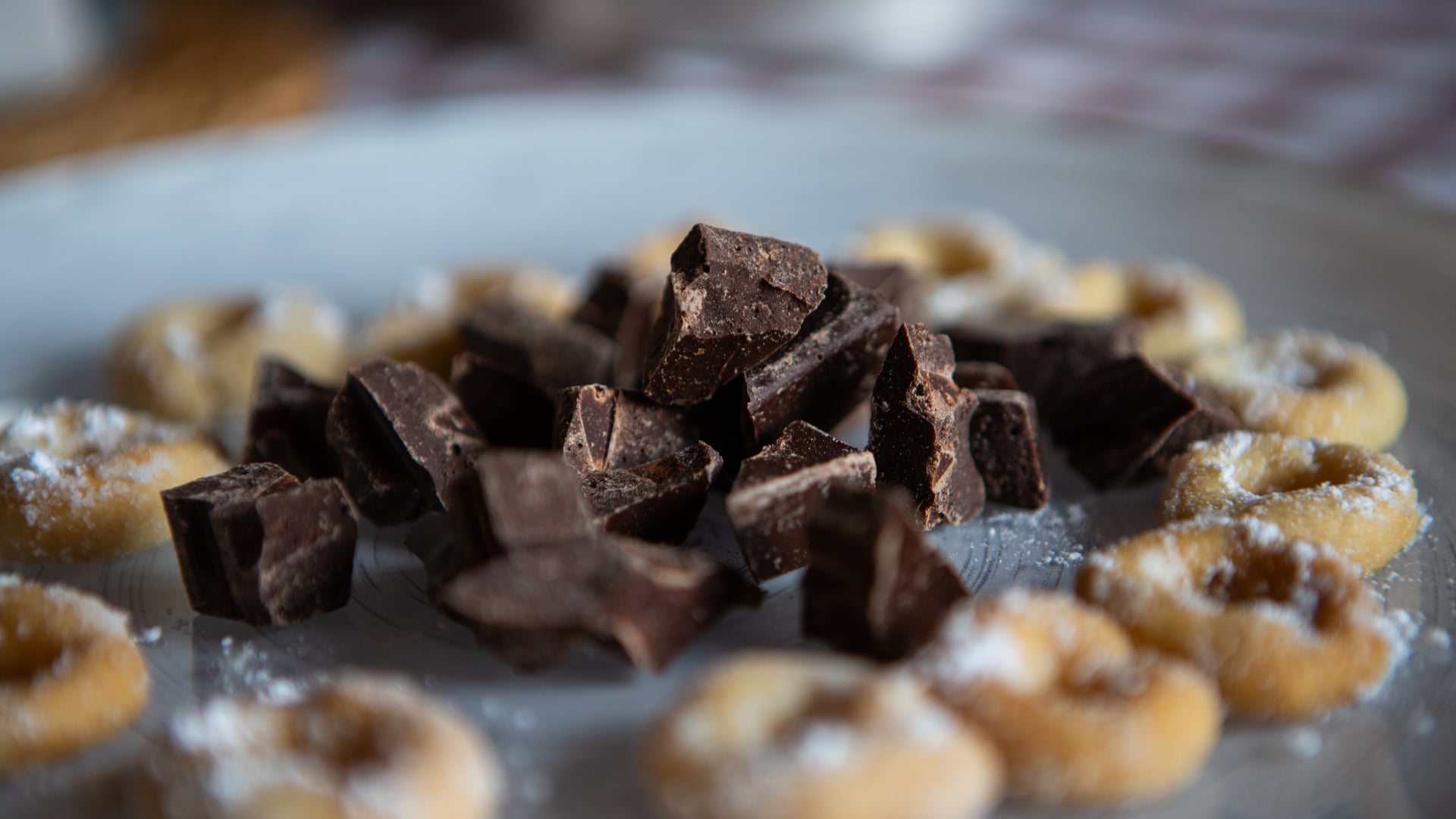
Traditional Alicante desserts: sweets of the Vinalopó
The traditional Alicante desserts are the sweet finishing touch to a generous Mediterranean cuisine. In the Vinalopó, the almond, the fig, honey and homemade liqueurs are the protagonists of a simple, honest confectionery, made to be shared after lunch. At Finca La Esperanza, among olive trees and at the foot of the mountains, we close every meal as tradition dictates: without haste, with sweets of the land and good company.
The almond, the star of the sweet
If one ingredient defines the confectionery of the Vinalopó, it is the almond. The almond trees that blossom on the region's slopes at the end of every winter are not just a visual spectacle: they are the base of much of the traditional Alicante sweets. Ground, toasted, in paste or whole, the almond brings flavour, texture and that Mediterranean character we recognise at the first bite.
The almond-growing tradition of the area goes back centuries, when the tree adapted perfectly to the dry climate and the poor soils of the interior. From those crops came recipes that have been passed down from generation to generation and which today are still present at festival tables and family after-lunches.
What is interesting about the almond is its versatility. In one same town it can appear ground in an almond macaroon, whole and sugar-coated as a treat, pressed together with the fig, or turned into the base of a turrón. That range of possibilities explains why the nut has withstood the passage of time and fashions: it is inexpensive, it keeps well and it combines with almost everything. Behind each sweet there is, moreover, a gesture of making the most of things and of respect for what the land gives, something very typical of the rural culture of the Vinalopó.
The almond tree blossoms before anyone else, while it is still cold. It is as if the Alicante land got ahead of the calendar to remind us that the sweet begins in the countryside.
Almond macaroons and turrones of the land
The almendrados are perhaps the Alicante sweet par excellence: small pastries made with ground almond, sugar and egg white, toasted in the oven until golden on the outside and tender inside. Simple in their recipe, they are irresistible in their flavour, with that combination of sweetness and aroma of toasted almond that fills the mouth.
Close by is also the great tradition of the turrón, a hallmark of the province. Although its capital is Jijona, the turrón is part of the sweet imagination of the whole area, especially at the festivals. The soft, creamy one, and the hard one, with the whole almond, coexist on any self-respecting table during the celebrations.
Almond sweets that are always there
- Almendrados: the classic of ground almond, sugar and egg white.
- Peladillas: candied almonds with a thin coat of sugar, typical of weddings and christenings.
- Turrón: soft and hard, the star of the Christmas festivities.
- Almond rollicos: small homemade biscuits flavoured with cinnamon and lemon.
The fig bread of the Vinalopó
The pan de higo (fig bread) is one of those humble sweets that sum up a whole culture of making the most of things. It is made with pressed dried figs, almonds, and a touch of spices such as cinnamon or aniseed, forming a compact paste that is cut into thin portions. It has no flour and needs no oven: it is pure fruit of the land, concentrated.
Traditionally it was made at the end of summer, when the fig trees gave their fruit in abundance, to preserve that sweetness throughout the year. It was the dessert of days in the countryside, the one that accompanied agricultural work and winter snacks by the fire.
Today it is still a delicious mouthful, perfect to accompany a coffee or a sweet wine. Its dense texture and its intense flavour make it a surprising end to a meal for those who do not know it, and a fond memory for those who grew up with it.
The fig bread is, moreover, a perfect example of the make-the-most-of-it confectionery that characterises the Mediterranean cuisine of the interior. Nothing is thrown away: the figs that are not eaten fresh are dried in the sun and transformed into a sweet that lasts for months. That ingenuity, born of necessity and country wisdom, has given rise to some of the most authentic flavours of the region. Cut into thin slices and accompanied by a piece of cured cheese, it becomes a sweet-savoury bite hard to forget.
Toñas and oven sweets
The toña is the sweet bun par excellence of the lands of the Vinalopó and of much of Alicante. An enriched, fluffy and aromatic bread, made with oil, sugar and lemon zest, which is traditionally associated with Easter but is enjoyed all year round.
Eating a toña is a ritual: it is accompanied by drinking chocolate, a glass of milk or a good coffee, and shared with the family. Its tender crumb and its lightly sugared crust make it the perfect breakfast or afternoon snack for days of celebration.
The making of the toña preserves much of the traditional know-how of the village bakeries. The dough needs time and rest, a good rise and skilled hands, and the result depends on details that cannot be learned from a book: the right amount of oil, the aroma of the lemon, the temperature of the oven. That is why the toñas of the bakeries of always have that flavour hard to find in industrial production. They are, in their own way, a small edible heritage worth keeping alive.
Other oven sweets of the region
- Coca boba: a flat, fluffy sponge cake, simple and very traditional.
- Coca de llanda: a homemade sponge cake baked in a tray, flavoured with lemon and cinnamon.
- Aniseed rolls: sweets fried or baked, typical of the festivals.
- Suspiros and tea pastries: small bites to accompany the after-lunch coffee.
These sweets are part of the same universe as the savoury cuisine of the area, so tied to the oven and to local produce. If you are interested in that culinary root, we explore it in depth in our article on the culinary tradition of Petrer and the Vinalopó.
Seasonal fruit as dessert
Not all Mediterranean sweetness is confectionery. One of the most rooted and healthy desserts of the region is, quite simply, seasonal fruit. The generous Alicante orchard offers, all year round, a parade of flavours that put the perfect, light finishing touch to a hearty meal of rice dishes.
In summer, melon and watermelon refresh after the meal; the fig and the grape arrive with the end of summer; in autumn and winter, the pomegranate, the persimmon and the citrus fruits take over. Well-ripened fruit, at its best, served fresh, is a simple luxury that the land gives and that never fails.
Choosing fruit for dessert is also a way of respecting the rhythm of the seasons and of closing the meal lightly, leaving room for a coffee or a small glass of liqueur. It is the most honest option of the Mediterranean table.
There are, moreover, simple preparations that elevate the fruit without complicating it: melon with a splash of muscat, figs opened with a little honey and almond, orange dressed with olive oil and cinnamon, or homemade quince paste to accompany cheese. These are desserts that respect the ingredient and let it speak for itself, in the line of a cuisine that trusts in the quality of the produce above artifice. In a meal of rice dishes, hearty by nature, that light finish is especially welcome.
Homemade liqueurs and mistelas
The Alicante after-lunch cannot be understood without the homemade liqueurs and the mistelas of the land. Made in an artisan way, with herbs, fruits or the grape must itself, they are the perfect digestif to round off a long meal in good company.
The digestifs of the area
- Mistela: a sweet wine made from must and alcohol, aromatic and moreish, ideal with the almond sweets.
- Herb liqueur: prepared with aromatic mountain plants, digestive and full of character.
- Cantueso: a traditional Alicante liqueur made with the flower of the cantueso (French lavender), sweet and perfumed.
- Sweet Moscatel wines: perfumed and floral, a classic to accompany dessert.
Many of these liqueurs are still made at home, following family recipes that vary from one household to another. Each family keeps its formula, its proportion of herbs, its maceration time, and the result is always different and personal. To serve a homemade liqueur at the end of the meal is, in a way, to share a secret of the house, a gesture of hospitality that goes beyond the simple digestif. At festival meals, the bottle passes from hand to hand and the conversation comes alive.
These liqueurs share the table and the origin with the great wines of the region. If you fancy delving into the world of local wine and its pairing, you will find much more in our guide to wine tourism, where the sweet and the glass go hand in hand.
The Mediterranean after-lunch
More than a moment, the sobremesa —the time spent lingering at the table after a meal— is a philosophy. In the Mediterranean, and very especially in Alicante lands, the meal does not end when the last plate is cleared: it continues around the table, with the sweets, the coffee, the liqueur and, above all, the conversation.
The after-lunch is the space where deals are closed, family arguments are resolved and friendships are cemented. It is a luxury of time that goes against the grain in a hurried world, and precisely for that reason it is so valuable. To prolong the table is a way of celebrating life.
In the Vinalopó, the after-lunch is not the end of the meal: it is its best part. The plate is finished, but the table stays alive long afterwards.
The traditional Alicante desserts are designed precisely for this: sweets to be nibbled little by little, liqueurs to be savoured in sips, fruits to be shared. Everything invites you to stay a while longer, to stretch out the chat, to enjoy the surroundings.
There is a geography of the after-lunch worth bearing in mind. It is not the same to prolong it inside a dining room with a fireplace, in the middle of winter, as to do so on an open-air terrace in the shade of some arches, with views of the olive trees and the mountains in the background. The setting shapes the conversation and the mood: the coolness of the afternoon, the song of the birds, the light changing colour as the hour advances. In a rural restaurant like ours, the after-lunch gains precisely for that reason, because the landscape accompanies you and encourages you to linger.
Desserts at Finca La Esperanza
At Finca La Esperanza we take as much care over the end of the meal as over the beginning. After our rice dishes and dishes of the land, we offer an after-lunch faithful to tradition: seasonal fruit, local sweets, coffee and the homemade liqueur that crowns the Mediterranean table. It is our way of seeing off every meal as it deserves, without haste and with the flavour of the land.
You can check everything we prepare, from the aperitif to the dessert, on our menu. And if you come wanting to enjoy a long after-lunch on the arched terrace, with the views of the olive trees and the Sierra del Maigmó, you will find the perfect setting for it. There is no better way to understand the cuisine of the region than to taste it from beginning to end, without skipping the sweet finale.
Remember that we open Wednesday to Sunday, from 1:30 pm to 6:30 pm, by prior reservation only. Book your table by calling 650 45 01 09 and come and discover the traditional Alicante desserts where they are best enjoyed: at the table, among olive trees and without watching the clock. We await you.