
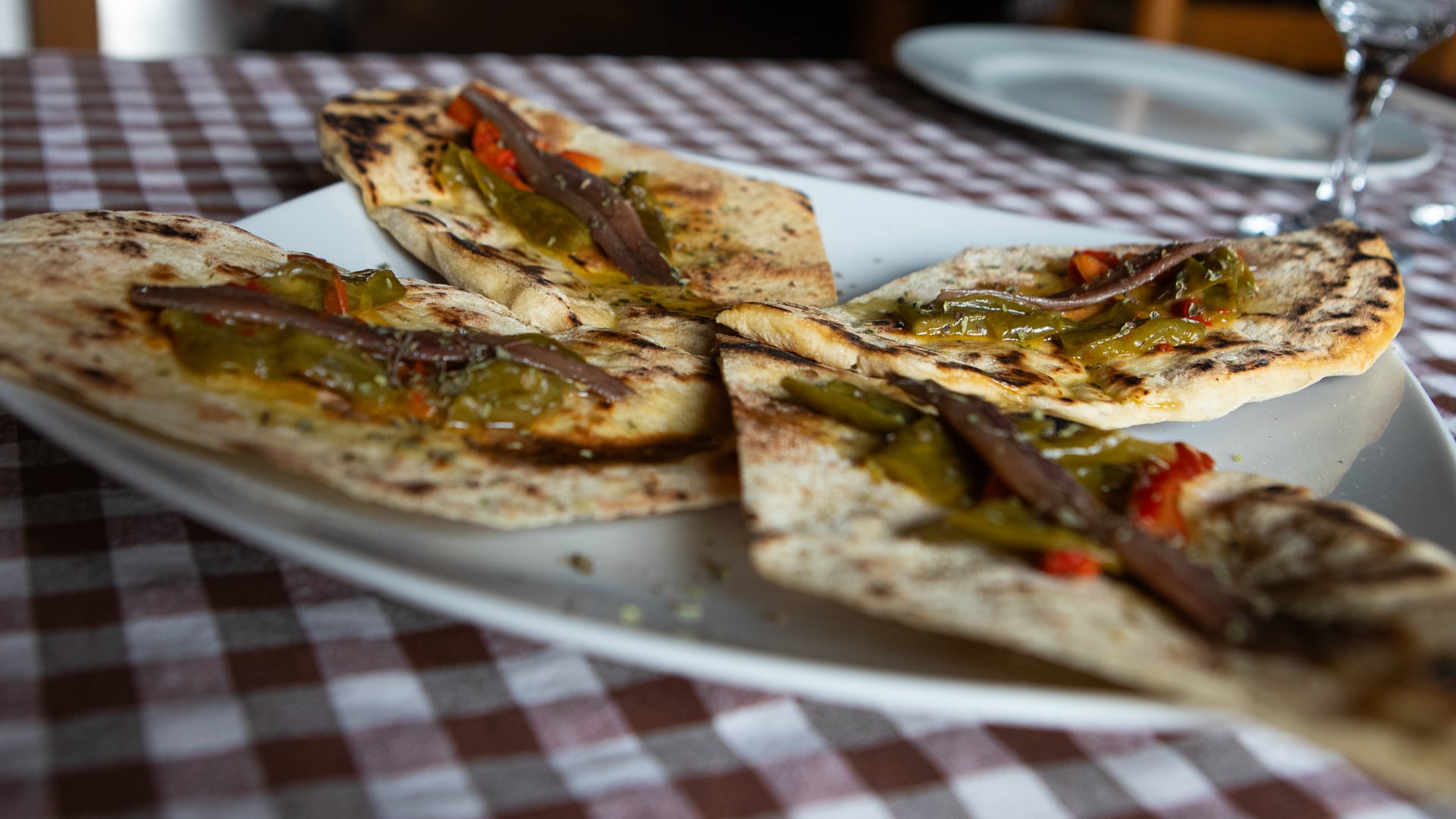
Alicante cocas of the Vinalopó: coca a la pala and the bread of the fields
The Alicante cocas are much more than an appetiser: they are the memory of the fields of the Vinalopó made into dough and baking. The coca a la pala with pepper and anchovy, the coca amb tonyina or the sweet festival cocas tell the story of a land that learned to make the most of flour, oil and whatever the garden gave. In this article we travel through that baking tradition that is still alive on every table in Petrer.
What an Alicante coca is
A coca is, in essence, a dough of flour, water, oil and salt, rolled out thin and baked with ingredients on top or inside. Behind this simple definition hides an enormous universe: in the Valencian Community, and very especially in the province of Alicante, there are as many cocas as there are regions, villages and families. Each area has its own, with its dough, its technique and its toppings.
What unites them all is their humble origin and their social role. The coca was the perfect use for leftover bread dough and seasonal produce; it was eaten in the fields, at festivals, at snack time and at celebrations. Eating a coca is, even today, a gesture of belonging, a way of being part of the Mediterranean world of inland Alicante.
In the Vinalopó Valley, cocas carry a special weight. It is a land of dryland farming, of olive oil and of baking, and all those elements come together in cocas of marked character, both savoury and sweet.
One common confusion is worth clearing up: the coca is not a pizza, even though at first glance they may look alike. The coca is older, born of the Mediterranean culture of flatbread, and it carries no melted cheese as a base nor does it aim to. Its character is another: a drier and often thinner dough, olive oil taking centre stage, and toppings that respect the flavour of each ingredient without masking it. Understanding this difference is the first step to appreciating the coca in its true measure.
The bread of the fields: the origin of the coca
To understand the coca you have to go back to bread. In country houses, when dough was kneaded and taken to the oven, there was always a portion left over. With it a thin flatbread was made that, taking advantage of the oven's heat before or after baking the bread, was topped with whatever was to hand: oil, salt, vegetables, salted fish. That is how the coca was born: as the bread of the fields, making-do turned into a delicacy.
The coca is the child of bread and of necessity. It was born so as not to waste anything, and in time it became one of the tastiest things on our table.
The region's olive oil is the undisputed star. It gives the dough its characteristic texture, aroma and flavour, and it is also the base of many of the toppings. Among olive trees like those surrounding Finca La Esperanza, it is easy to understand why the coca tastes of this land: it literally comes from it.
One dough, a thousand variations
From that basic dough of flour, water, oil and salt, each area and each family developed its own version. Some cocas are made with fermented dough, fluffier; others, without yeast, come out thin and crisp. Some are kneaded only with oil; others add a little wine or warm water to achieve a particular texture. This capacity for adaptation is what has allowed the coca to survive for centuries and keep reinventing itself without losing its essence. It is a canvas on which each bakery writes its history.
The coca a la pala with pepper and anchovy
The coca a la pala is one of the great ambassadors of savoury Alicante baking. Its name comes from the oven paddle (pala) with which it was handled, and its hallmark is a very thin, crisp dough, almost like a biscuit, crowned with intensely flavoured ingredients. The most beloved version is the one with pepper and anchovy.
The balance of the coca a la pala
What makes this coca masterful is the contrast. The thin, crisp dough provides the neutral base; the pepper, sweetness and juiciness; and the anchovy, that salty, deep punch that rounds it all off. A drizzle of good olive oil ties the flavours together. The result is a mouthful you can't stop eating, perfect as a starter to share or to open the appetite before a rice.
On our menu, the coca a la pala with pepper and anchovy is one of the most requested starters, precisely because of that combination of simplicity and flavour that defines good traditional cooking.
The secret of a good coca a la pala lies as much in the dough as in the baking. The dough must be rolled out very thin and baked at a high temperature so it turns crisp without drying out, and the toppings must be spread generously but without overloading, so the base does not soften. The right point is a coca that cracks when you break it and that combines, in every bite, the crunch of the dough with the juiciness of the pepper and the intensity of the anchovy. When everything fits, it is hard to stop eating.
The coca amb tonyina and other savoury cocas
The repertoire of savoury cocas of the Vinalopó is broad. The coca amb tonyina (tuna coca) is another of the classics: a dough that wraps a filling of tuna, sometimes with pine nuts, tomato, onion and egg, very much tied to special dates such as Holy Week in many Alicante villages. It is heartier than the coca a la pala and works almost as a dish in itself.
Alongside it live many other variants:
- Vegetable coca: with roasted pepper, tomato, onion and courgette, an ode to the seasonal garden.
- Sardine or salted-fish coca: where the cured fish brings intensity over the thin dough.
- Tomato and onion coca: the humblest and one of the tastiest, pure Mediterranean.
They all share the same philosophy: few ingredients, well chosen, over a dough that is as much the star as the topping.
Many of these cocas are tied to the calendar and the seasons. Vegetable cocas shine when the garden gives its best in spring and summer; salted-fish ones traditionally accompanied the months when fresh fish was scarce inland; and some, like the coca amb tonyina, are associated with specific dates of the year. This connection with the natural cycle is one of the hallmarks of Mediterranean cooking, and the coca reflects it to perfection.
The sweet and festival cocas
The coca is not only savoury. The Alicante tradition holds a good number of sweet cocas, many tied to the festivals and celebrations of the calendar. Made with oil or lard, sugar, almond and aromas such as lemon zest or aniseed, they are the perfect finishing touch to an after-lunch conversation.
Baked sweets with roots
These sweet cocas and baked treats connect with a whole traditional confectionery that has deep roots in the Vinalopó. The almond, grown in the same fields as the olive trees, is the star ingredient of a good part of these sweets. Accompanied by a coffee and a local liqueur, they close a meal as the canons of inland Alicante dictate.
The confectionery of the sweet cocas also has a strong seasonal and celebratory component. Many of these preparations appeared on specific dates —patron-saint festivals, pilgrimages, calendar feasts— and their making was a family event in itself, with several generations gathered around the oven. That bond between the sweet and the festival explains why, even today, biting into a sweet almond coca awakens childhood memories in so many locals of the region. The flavour is bound up with memory.
The baking tradition in the Vinalopó
Behind every coca there is a baking culture that is still alive. Wood-fired ovens, family bakeries and recipes handed down from generation to generation keep alive preparations that are part of the region's identity. Kneading, rolling out, topping and baking is a gesture that has been repeated the same way for centuries.
This tradition is set within a broader gastronomic heritage, the same one that gives meaning to the region's rices, stews and rustideras. If you would like to learn about that culinary legacy, in our article on the culinary tradition of Petrer and the Vinalopó we delve into the roots of this inland cuisine.
Keeping this culture alive is not just a matter of nostalgia. Every time a coca is made following the recipe of always, gestures, flavours and knowledge that are part of the region's soul are preserved. In a world that tends towards homogenisation, the cocas of the Vinalopó are a reminder that the identity of a place is also cooked, baked and shared at the table. That is why backing them is, at heart, backing the territory.
How to enjoy cocas today
The coca is a versatile food that adapts to any time of day. These are some of the best ways to enjoy it.
- As a starter to share: the coca a la pala, cut into portions, is an ideal appetiser to open a group meal.
- As a snack or country lunch: as it has always been done, wrapped and taken to the mountains after a walk.
- With a good wine: a Moscatel white or a young local red enhances both the savoury and the sweet cocas.
- As dessert: the sweet almond cocas, along with a coffee and a liqueur, close the table to perfection.
The key is always in the produce: good flour, good oil and seasonal toppings. With those elements, a simple coca becomes a memorable mouthful.
The coca is, finally, a deeply sociable food. It is broken with the hands, shared in the middle of the table and invites conversation without formalities. At family meals, at country snacks or as an appetiser among friends, it always plays the same role: bringing people together around something good and simple. Perhaps that is why it has withstood the passage of time better than other, more sophisticated preparations. The coca needs no cutlery or ceremony; only good hands to bake it and good company to share it with.
The cocas at Finca La Esperanza
At Finca La Esperanza we keep this baking tradition alive. Our coca a la pala with pepper and anchovy is one of the starters that best represents the cuisine of the Vinalopó: thin, crisp dough, juicy pepper, intense anchovy and a good local olive oil. A mouthful that sums up, in few ingredients, centuries of Mediterranean culture.
The coca opens the way to a menu full of roots: local olives, homemade ensaladilla, country rices, baked rustideras and traditional desserts. You can discover it in full on our menu, served among olive trees and with the Sierra del Maigmó in the background. Every dish answers to the same idea: to respect regional produce and time-honoured recipes, so that whoever visits us takes home the authentic flavour of inland Alicante.
If you want to start your meal with a good coca a la pala and continue with the best of inland Alicante cuisine, book your table on 650 45 01 09. Remember that we only open by prior reservation, Wednesday to Sunday. Write to us too from the contact page and we will keep a place for you at the table.